Signs Your Commercial Roof Needs Replacement
Signs Your Commercial Roof Needs Replacement
Identifying when a commercial roof needs replacement is crucial for maintaining the integrity of your building and ensuring the safety of its occupants. A well-maintained roof protects against leaks, energy loss, and structural damage, which can lead to costly repairs. This article will guide you through the signs that indicate your commercial roof may need replacement, the early signs of damage, and how to conduct a thorough inspection. Additionally, we will discuss the factors that influence replacement timing and the cost considerations involved. By understanding these elements, property managers can make informed decisions about their roofing needs.
Signs that indicate your commercial roof needs replacement
Recognizing the signs that your commercial roof requires replacement is essential for preventing further damage and ensuring the longevity of your property. Key indicators include:
- Visible Damage: Look for cracks, blisters, or missing shingles that can compromise the roof’s integrity.
- Water Stains: Interior water stains on ceilings or walls often indicate leaks that may necessitate a roof replacement.
- Age of Roofing Materials: Most commercial roofs have a lifespan of 20-30 years, though some materials can last longer. If your roof is approaching this age, it may be time to consider replacement.
Regular inspections are vital to catch these signs early. Sutter Roofing Systems specializes in commercial roofing services, including inspections and replacement, ensuring your roof remains in optimal condition.
What Are the Early Signs of Commercial Roof Damage?
Early detection of roof damage can save property managers significant costs in repairs and replacements. Common early signs include:
- Water Stains on Ceilings: These stains often indicate leaks that can lead to more extensive damage if not addressed promptly.
- Sagging Spots in the Attic: Sagging areas may suggest structural issues that require immediate attention.
- Increased Energy Bills: A sudden spike in energy costs can indicate that your roof is no longer providing adequate insulation.
Addressing these early signs can help extend the life of your roof and prevent costly replacements.
How to Detect Flat Roof Leak Signs and Membrane Cracks
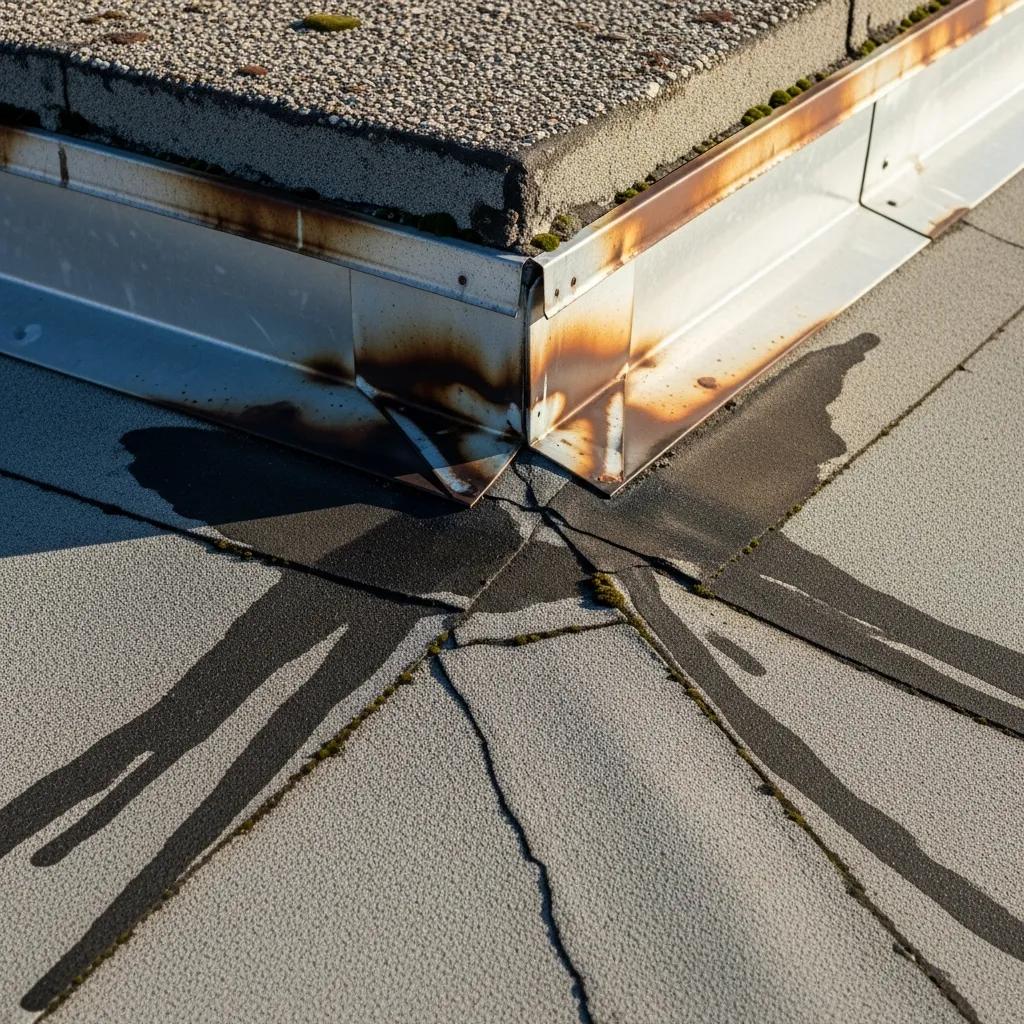
Flat roofs are particularly susceptible to leaks and membrane issues. To detect these problems, look for:
- Visible Water Stains: Check for stains on the interior walls or ceilings, which can indicate leaks.
- Mold or Mildew Growth: The presence of mold suggests moisture retention, often due to leaks.
- Damaged Flashing: Inspect the flashing around vents and chimneys for cracks or deterioration.
Regular inspections and maintenance can help identify these issues before they escalate into major problems.
Recognizing Common Commercial Roof Deterioration Indicators
Understanding the common indicators of roof deterioration can help property managers take proactive measures. Key signs include:
- Granule Loss in Gutters: Accumulation of granules in gutters indicates that the roof is deteriorating.
- Mold or Mildew Growth: This growth can compromise the roof’s integrity and indicates moisture issues.
- Debris Accumulation: Leaves and other debris can trap moisture, leading to deterioration.
By recognizing these signs, property managers can schedule timely inspections and maintenance.
How to Conduct a Comprehensive Commercial Roof Inspection?
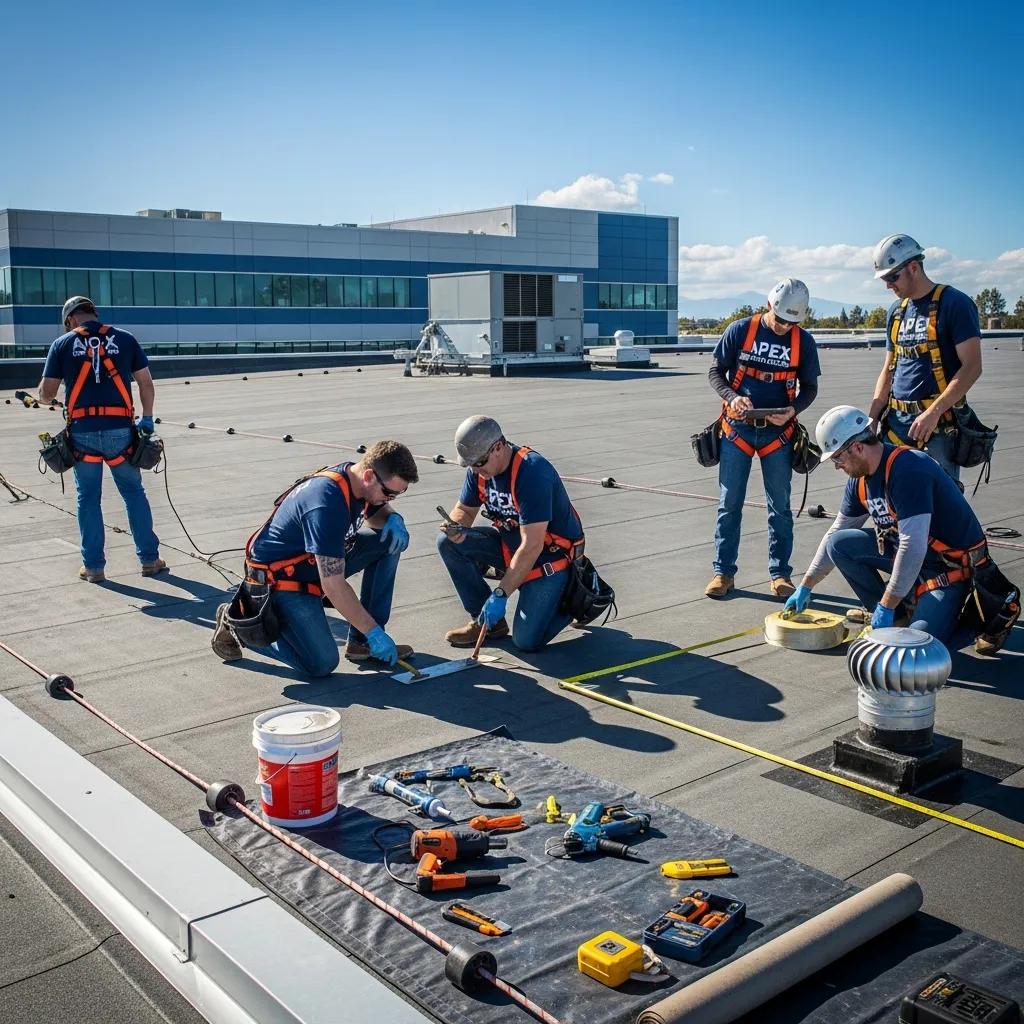
Conducting a thorough roof inspection involves several critical steps:
- Safety Precautions: Always prioritize safety by using proper gear and equipment.
- Key Areas to Inspect: Focus on areas prone to damage, such as flashing, seams, and drainage systems.
- Documenting Findings: Keep detailed records of any damage or concerns for future reference.
Regular inspections can help identify potential issues before they require costly repairs.
Essential Checklist for Flat Roof Damage Assessment
When assessing flat roof damage, use the following checklist:
- Visual Inspection: Look for visible signs of damage, such as cracks or blisters.
- Structural Checks: Ensure the roof structure is sound and free from sagging.
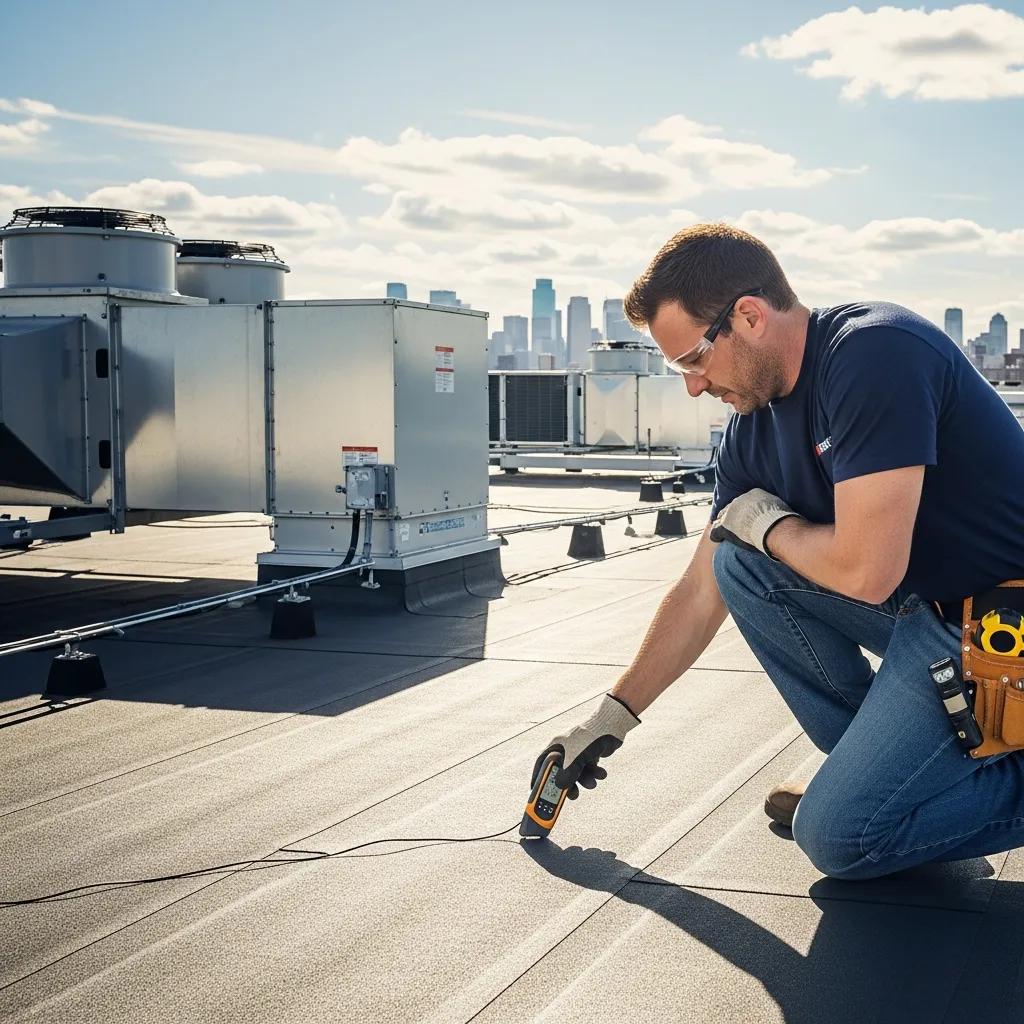
- Leak Detection: Use moisture meters or infrared cameras to identify hidden leaks.
This checklist can help ensure a comprehensive assessment of your flat roof’s condition.
Advanced techniques like thermography are increasingly vital for pinpointing elusive leaks, especially across vast industrial roofscapes.
Thermography for Industrial Roof Leak Detection
The horizontal roofs of industrial buildings are the weakest part of a structure. Imperfect design of horizontal roofs causes roof leakage. For roofs with a large surface area, locating leakage points is very difficult.
Roof leak detection by thermography of as-built BIM, 2022
This non-invasive approach offers significant advantages, allowing for the detection of water intrusion without direct physical contact with the ceiling.
Non-Invasive Infrared Thermography for Leak Detection
infrared thermography’s ability to probe the ceiling for water intrusion without physical contact with the ceiling.
Non-Invasive Roof Leak Detection Using Infrared Thermography, 2004
When and How Often Should Property Managers Schedule Inspections?
Property managers should schedule roof inspections at least twice a year, with additional assessments after severe weather events. Key considerations include:
- Twice a Year Inspections: Regular inspections help catch issues early.
- Post-Storm Assessments: Inspecting after storms can identify damage caused by high winds or heavy rain. For emergency repairs related to weather damage, Sutter Roofing Systems offers specialized storm damage roof repair services.
- Consideration of Roof Age: Older roofs may require more frequent inspections to monitor their condition.
By adhering to a regular inspection schedule, property managers can maintain the integrity of their roofs.
Modern technological advancements, such as the integration of UAVs and deep learning, are revolutionizing the efficiency and accuracy of flat roof leak detection.
UAV & Deep Learning for Flat Roof Leak Detection
This paper presents an efficient and accurate method for detecting flat roof leaks using a combination of unmanned aerial vehicles (UAVs) and deep learning. The proposed method utilizes a DJI M300 drone equipped with RGB and thermal cameras to capture high-resolution images of the roof. These images are then processed to create orthomosaics and digital elevation models (DEMs). A deep learning model based on the U-NET architecture is then used to segment the roof into different classes, such as PVC foil, windows, and sidewalks. Finally, the damaged insulation is identified by analyzing the temperature distribution within the PVC foil segments. The proposed method has several advantages over traditional inspection methods. It is much faster and more efficient. A UAV can collect images of a large roof in a matter of minutes, while traditional methods can take several days or weeks. The orthomosaics and temperature maps generated by the UAV are much more detailed than the im
Flat roof classification and leaks detections by Deep Learning, 2023
When Is It Time to Replace Your Commercial Roof?
Determining when to replace your commercial roof involves assessing several factors:
- Visible Damage: Significant damage may necessitate replacement rather than repair. For guidance on deciding between repair and replacement, see roof repair vs replacement.
- Water Stains: Persistent water stains can indicate underlying issues that require a new roof.
- Increased Energy Bills: A rise in energy costs may suggest that the roof is no longer efficient.
Understanding these factors can help property managers make informed decisions about roof replacement.
Key Factors Determining Roof Replacement Timing
Several factors influence the timing of roof replacement, including:
- Age of Roofing Materials: Most commercial roofs last 20-30 years; nearing this age may indicate the need for replacement.
- Signs of Material Deterioration: Visible damage or wear can signal that replacement is necessary.
- Energy Efficiency Considerations: Older roofs may not meet current energy efficiency standards, prompting replacement.
By considering these factors, property managers can better plan for roof replacement.
How Local Climate and Architectural Styles Influence Replacement Needs
Local climate and architectural styles significantly impact roof replacement needs. Key considerations include:
- Local Climate Effects: Areas with heavy rainfall or snow may require more frequent roof inspections and possibly replacements due to increased wear.
- Architectural Style Considerations: Certain styles may be more prone to specific types of damage, influencing replacement timing.
- Material Selection: Choosing materials suited to the local climate can extend the roof’s lifespan. For more on selecting the right roofing materials, visit our roofing materials guide.
Understanding these influences can help property managers make informed decisions about roofing materials and replacement timing.
What Are the Cost Considerations for Commercial Roof Replacement?
Cost considerations for commercial roof replacement include several factors:
- Roof Size and Complexity: Larger and more complex roofs typically incur higher replacement costs.
- Material Type: The choice of roofing materials can significantly impact overall costs.
- Labor Costs: Skilled labor is essential for proper installation and can affect the total price.
By understanding these cost factors, property managers can budget effectively for roof replacement.
Understanding Roof Replacement Cost Commercial Factors
Several factors influence the costs associated with roof replacement:
- Existing Roof Condition: The state of the current roof can affect removal and replacement costs.
- Building Codes and Permits: Compliance with local regulations may add to the overall expense.
- Warranty Options: Extended warranties may increase initial costs but provide long-term savings.
Awareness of these factors can help property managers plan for the financial implications of roof replacement.
Budgeting for Quality Materials and Skilled Craftsmanship
When budgeting for roof replacement, consider the following:
- Research Quality Products: Investing in high-quality materials can extend the roof’s lifespan. Learn more about material options in our roofing materials guide.
- Get Multiple Estimates: Comparing quotes from different contractors can help identify the best value.
- Consider Long-Term Costs: While cheaper options may save money upfront, they can lead to higher costs over time due to repairs and replacements.
By prioritizing quality, property managers can ensure a successful roofing project.
How Can Maintenance Extend the Lifespan of Your Commercial Roof?
Regular maintenance is key to prolonging the lifespan of your commercial roof. Effective strategies include:
- Regular Inspections: Frequent inspections can catch issues early, preventing costly repairs.
- Timely Repairs: Addressing minor issues promptly can prevent them from escalating into major problems.
- Seasonal Maintenance: Preparing the roof for seasonal changes can help mitigate damage from extreme weather.
Implementing these maintenance practices can significantly extend the life of your roof. For detailed tips on extending commercial roof life, visit our dedicated guide.
Proven Maintenance Tips to Delay Roof Replacement
To delay roof replacement, consider these maintenance tips:
- Regular Inspections: Schedule inspections to identify and address issues early.
- Clean Gutters: Keeping gutters clear prevents water buildup that can damage the roof.
- Trim Overhanging Branches: Reducing tree cover can minimize debris accumulation and potential damage.
By following these tips, property managers can extend the life of their roofs and delay costly replacements.
Benefits of Regular Repairs and Emergency Services
Investing in regular repairs and emergency services offers several advantages:
- Prolonged Roof Lifespan: Timely repairs can significantly extend the life of the roof.
- Cost Savings: Addressing issues early can prevent more extensive and expensive repairs later.
- Increased Property Value: A well-maintained roof enhances the overall value of the property.
By prioritizing regular maintenance and repairs, property managers can protect their investment and ensure the longevity of their roofs.